The library

Articles on income investing.

Articles on preferred stocks, baby bonds, business development companies and covered-call ETFs. The library covers each asset class, strategy, tax treatment, the markets and the method behind the scores. Every article is free to read.

Featured · StrategyJul 20, 2026

Building an Income Portfolio with Preferreds and Baby Bonds

Three simple habits — spreading your holdings across different companies and industries, different call dates, and different types of securities — are what separate a well-built income portfolio from a lucky stack of high yields.

By Editorial5 min
Read the article

The newsletter

One issue, every Sunday.

Eight blocks of data, one chart, no commentary. Rates, the week's movers, listings and filings across preferred stocks, BDCs and covered-call ETFs.

Free · Sundays · unsubscribe at any time · addresses are never shared

More from the library

9 articles
StrategyJul 20, 2026

Cumulative vs. Non-Cumulative Preferred Stocks

One clause in the prospectus decides whether a missed dividend must eventually be paid back to you or is simply lost for good — a detail that costs almost nothing in normal times but matters enormously when a company runs into trouble.

Editorial5 min
MarketsJul 20, 2026

Credit Ratings for Preferred Stocks: Agency Methodologies

One to three notches below the issuer's own senior debt is where rating agencies deliberately place preferred stock, and a substantial share of the exchange-traded market carries no rating at all.

Editorial5 min
StrategyJul 20, 2026

What Are Preferred Stocks? A Beginner's Guide.

A $25 par value, a fixed dividend, and a claim ranking above common stock but below all debt define preferred stock, an instrument that pays like a bond and absorbs losses like equity.

Editorial5 min
Asset classJul 14, 2026

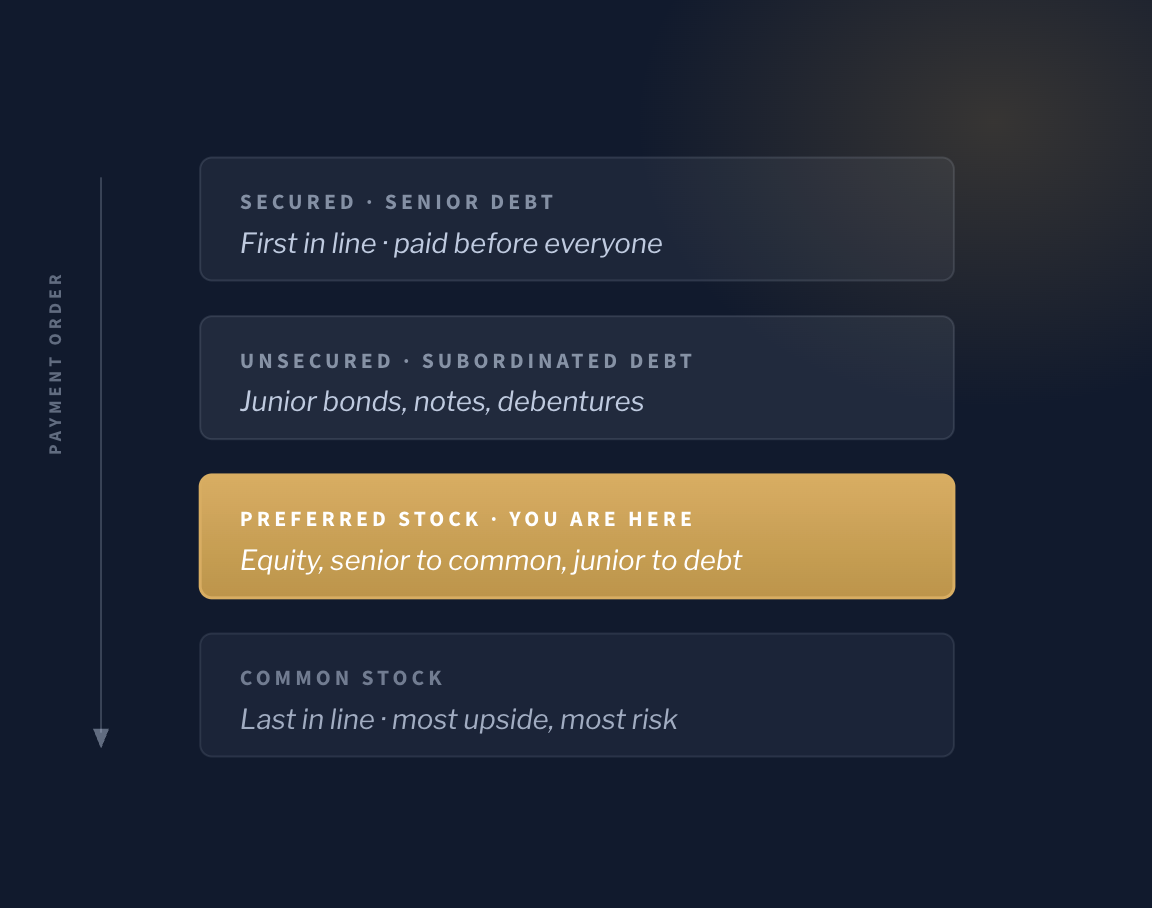
Where preferreds actually sit in the capital structure

Preferred stockholders rank above common equity and below every layer of debt — a position the name only partly conveys.

Editorial5 min
Asset class

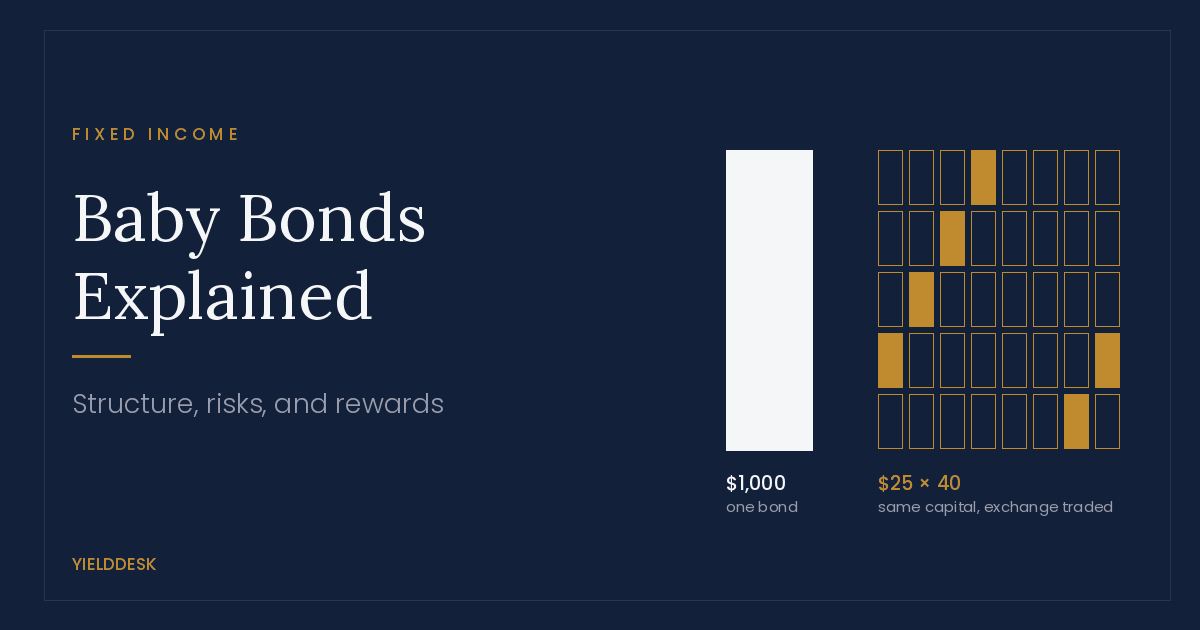
Baby Bonds Explained: Structure, Risks, and Rewards

At $25 par and traded on an exchange like a stock, baby bonds are genuine debt with a stated maturity and contractual interest, ranking senior to preferred stock from the very same issuers.

Editorial5 min
Strategy

Understanding Call Provisions and Call Risk

Thirty days' notice is all most issuers owe before redeeming a security at par, and that option, held entirely by the other side of the transaction, shapes how every preferred and baby bond is priced.

Editorial5 min
Strategy

Current Yield vs. Yield to Call vs. Yield to Worst

Three yield figures accompany nearly every preferred and baby bond listing, and a premium-priced security can advertise a 6.7% current yield while delivering barely 4.8% to its call date.

Editorial5 min
Strategy

Preferred Stocks vs. Common Stocks vs. Bonds: Key Differences

Five dimensions — cash flow claims, asset priority, upside participation, maturity, and taxation — determine where common stock, preferred stock, and bonds each belong in a portfolio, and the familiar "hybrid" label captures none of them.

Editorial5 min